Speech Frequency Analytics: How Voice Patterns Highlight Hidden Stress
Published Date:
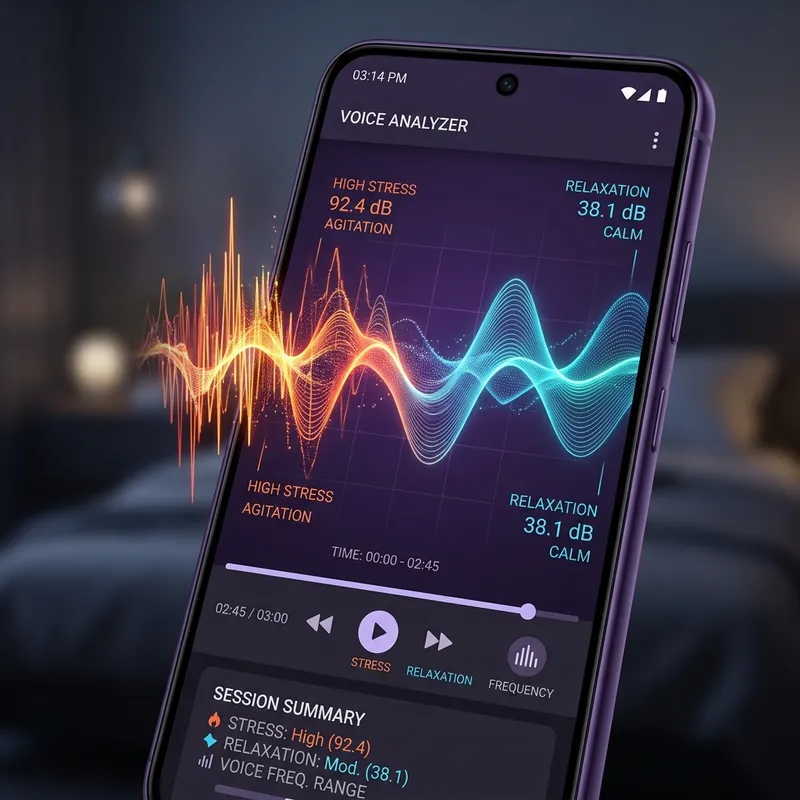
As humans, we are incredibly skilled at masking our true emotional states. When a colleague asks how we are doing on a Monday morning, we instinctively smile and say, “I’m fine, just a bit tired.” We use carefully curated language to convince our friends, our family, and even ourselves that we have our anxiety perfectly under control.
However, while your choice of vocabulary can easily lie, your physiology cannot. No matter how perfectly you script your words, the mechanical sound waves leaving your mouth tell an entirely different, incredibly honest story.
Over the last decade, clinical psychologists and acoustic engineers have revolutionized the study of mental health by analyzing the physical properties of the human voice. Advanced speech frequency analytics reveal that our vocal patterns, specifically pitch variations, speech speed, and micro-tremors, provide direct, irrefutable biomarkers of hidden mental stress. Here is a deep dive into the science of vocal acoustics and how you can use it to track your emotional wellness, compiled by our AI voice diary companion Fısıltı.
The Biology of Voice: Why We Cannot Hide Stress
To understand how speech analytics detect anxiety, you must understand the deep neurological connection between your emotions and your throat.
Your voice is not generated in isolation; it is a complex physical symphony coordinated by the brain, the lungs, and the larynx (the voice box). The larynx is heavily innervated by the vagus nerve, which is the primary superhighway of the parasympathetic nervous system. When you experience acute stress, your brain immediately enters a sympathetic “fight-or-flight” state. This chemical trigger dumps cortisol and adrenaline into your bloodstream, which instantly alters your respiratory system and tightens your muscular structure to prepare for physical combat.
Because the muscles controlling your vocal cords are incredibly delicate and highly sensitive to adrenaline, they are the very first muscles in the body to react to a spike in cortisol. You cannot consciously override this physical reaction. Even if you are attempting to speak calmly, the biological tension alters the acoustic frequency of the sound waves you produce, creating measurable data points that highlight your hidden anxiety.
Step-by-Step Breakdown: The 3 Biomarkers of Vocal Stress
When you use an audio journaling app, AI algorithms do not just listen to what you say; they analyze the mathematical properties of how you say it. Here are the three primary vocal biomarkers that reveal hidden stress.
Step 1: Pitch Elevation (The Tension Marker)
Pitch (measured in Hertz) is the perceived highness or lowness of your voice, determined by how fast your vocal cords vibrate.
- The Biological Trigger: When you are relaxed, the muscles in your neck and throat are loose, allowing your vocal cords to vibrate slowly, producing your natural, baseline pitch. However, when stress hits, adrenaline causes the muscles around your larynx to constrict.
- The Acoustic Result: This physical tightness stretches the vocal cords tighter (similar to tightening a guitar string), forcing them to vibrate significantly faster. As a result, your vocal pitch artificially rises. If your baseline speaking pitch is usually 120 Hz, but today you are speaking at 145 Hz, speech analytics algorithms can mathematically identify that you are experiencing acute muscular tension and emotional stress.
Step 2: Speech Rate and Pauses (The Cognitive Load Marker)
The speed at which you speak (syllables per second) and the duration of your pauses indicate how overwhelmed your brain is.
- The Biological Trigger: Anxiety severely limits your working memory and restricts your airflow. When panicked, you resort to shallow chest breathing, which means you run out of air faster.
- The Acoustic Result: This leads to a frantic speech pattern. You will speak incredibly fast in short bursts, followed by inappropriately long, exhausted pauses to gasp for air. Also, high cognitive load (trying to process complex trauma) causes an increase in “fillers” like “um” and “uh,” as the brain struggles to organize thoughts. When you learn about overcoming journaling block via voice, you will notice that letting go of this pressure actually smooths out your speech rate.
Step 3: Vocal Micro-Tremors (The Adrenaline Marker)
This is the most subtle, yet most accurate, indicator of absolute panic.
- The Biological Trigger: A massive surge of adrenaline causes tiny, involuntary spasms in the striated muscles of the body. You may have noticed your hands shaking during a panic attack; the exact same thing happens to the microscopic muscles in your vocal cords.
- The Acoustic Result: These micro-tremors (usually occurring between 8 to 12 Hz) are often entirely imperceptible to the human ear. However, highly sensitive acoustic AI can detect these microscopic shivers in the sound wave. If micro-tremors are present, it is a biological guarantee that the speaker is experiencing intense sympathetic nervous system arousal.

Prevention: Using AI Analytics to Prevent Burnout
Understanding your vocal stress markers is scientifically fascinating, but applying that data to your daily life is what prevents emotional burnout.
- Establishing a Baseline: To effectively track your stress, you must first establish your baseline. By recording a 2-minute audio entry every day for a week, speech analytics software can learn the unique mathematical signature of your calm voice.
- Objective Self-Awareness: The greatest danger of chronic stress is that you eventually become numb to it. You might think you feel “normal,” but your voice data will objectively show that your pitch has been elevated for three consecutive weeks. This undeniable, objective data prevents you from lying to yourself about your mental exhaustion.
- Data-Driven Intervention: When your audio journal flags a massive spike in your vocal stress markers, you can immediately deploy interventions. Instead of pushing through the anxiety, you can take 10 minutes to practice deep breathing exercises for stress relief, actively lowering your cortisol levels before you face the rest of the day.
When to Seek More Help or Watch for Edge Cases
While speech frequency analytics are a brilliant tool for tracking daily emotional trends and general anxiety, they are not a medical diagnostic tool for physical diseases.
There are several edge cases where an AI might misinterpret your vocal data. If you are suffering from a common cold, seasonal allergies, or laryngitis, the physical inflammation of your vocal cords will drastically alter your pitch, which the software might misread as acute stress. On top of that, if you consume massive amounts of caffeine, the resulting physical jitters can induce vocal micro-tremors that mimic the acoustics of a panic attack.
More to the point, persistent, unexplained changes in your vocal pitch or a constant hoarseness that lasts for more than three weeks could be an indicator of a physical vocal pathology (such as vocal nodules, acid reflux, or thyroid issues). In these cases, you should stop relying on wellness apps and immediately consult an Otolaryngologist (Ear, Nose, and Throat doctor) for a physical examination.
Quick Summary
- Words lie, acoustics don’t: You can easily mask your feelings with positive vocabulary, but the physical sound waves of your voice reveal your true biological state.
- The brain-throat connection: The larynx is highly sensitive to adrenaline and cortisol, meaning it reacts instantly to psychological stress.
- Pitch elevation: Stress tightens the throat muscles, pulling the vocal cords taut and forcing your vocal pitch to rise measurably.
- Erratic speech rates: Anxiety restricts breathing, leading to fast, frantic talking broken up by long, exhausted pauses.
- Micro-tremors: Adrenaline causes the vocal cords to shake microscopically, a tremor that AI can detect even if humans cannot hear it.
- Preventing burnout: Tracking your vocal acoustics over time provides objective data, proving you are stressed even when you try to deny it.
Frequently Asked Questions
Can AI tell if I am lying based on my voice?
No. While some older technologies (like Voice Stress Analysis) were marketed as lie detectors, modern science has largely debunked them. Speech analytics cannot detect deceit; they can only detect the presence of physiological stress. A person might be stressed because they are lying, or simply because they are anxious about being questioned.
Does crying change the acoustic frequency of my voice?
Yes, dramatically. Crying causes massive inflammation and mucus buildup in the vocal tract, which completely alters the resonance chamber of your throat. It also causes severe spasms in the diaphragm, which interrupts the steady flow of air required for smooth speech, leading to highly erratic sound waves.
Can speech analytics diagnose clinical depression?
Speech analytics are currently being heavily researched as a diagnostic tool for depression. While an app cannot provide a clinical diagnosis, studies show that severe depression often results in a flattened vocal pitch (monotone), slower speech rates, and longer pauses, which AI can track as a potential warning sign.
Is it safe to let an app analyze my voice?
Privacy is critical when dealing with biometric data. You should only use apps (like Fısıltı) that process your audio on-device or use end-to-end encryption. Always check the privacy policy to ensure your raw audio files are not being sold to third-party advertisers or used to train public language models without your consent.
How often should I record to get an accurate stress baseline?
For the most accurate acoustic baseline, you should record a short voice entry (2 to 3 minutes) at roughly the same time every day for at least seven days. This allows the software to average out your pitch and speed, accounting for minor daily fluctuations in mood and energy.
Transform Your Voice Into Mental Clarity with Fısıltı!
Ready to integrate voice journaling into your wellness routine and analyze your emotional trends? Download the Fısıltı app. Fısıltı securely transcribes your audio, charts daily stress and mood graphs from your speech patterns, and recommends guided breathing exercises. Download Fısıltı App Now and start listening to yourself!